

How DV360 differs from Google Ads
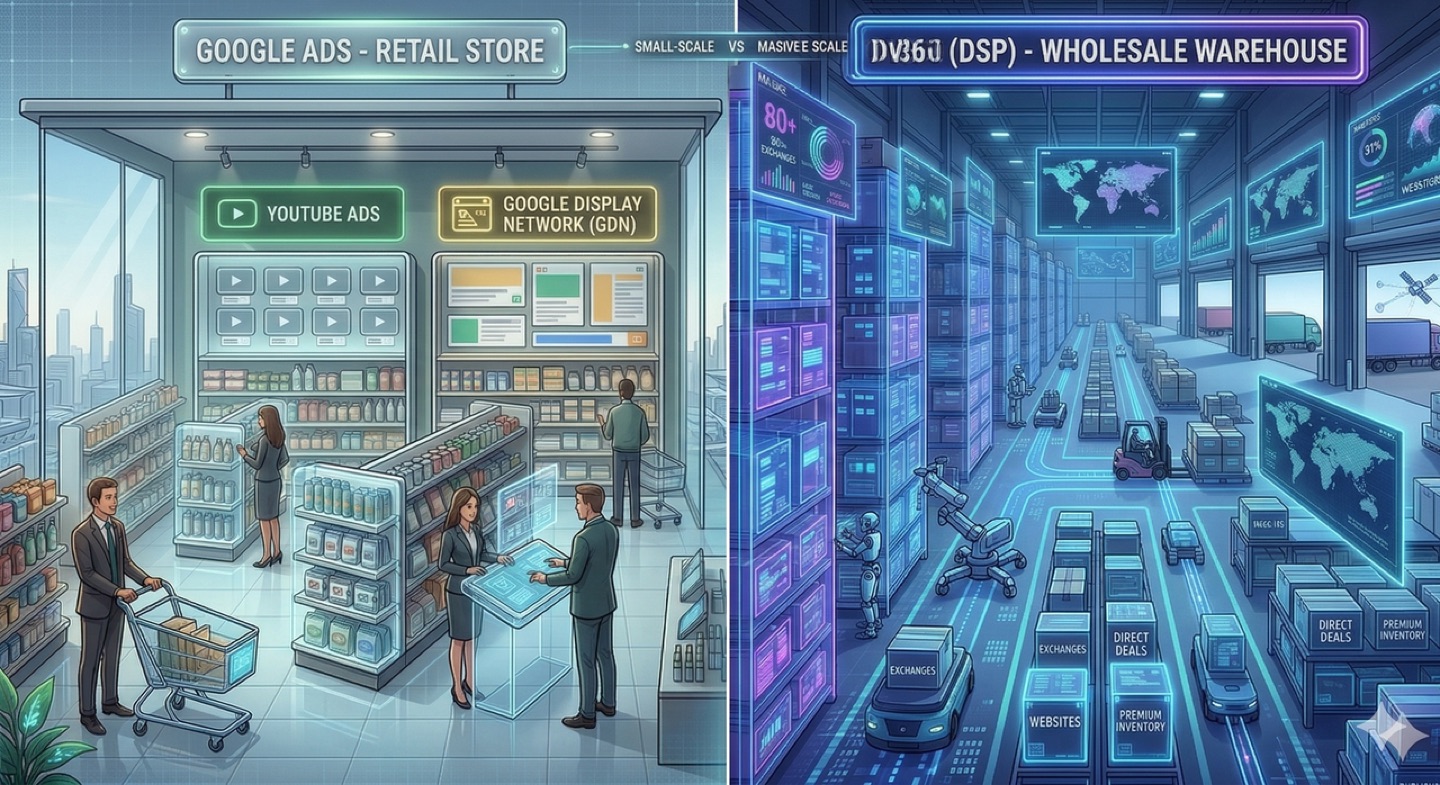
Using a retail analogy, Google Ads is like a shop, while DV360 is a platform for buying advertising across multiple inventory sources — a demand-side platform, or DSP.
Reach: Google Ads provides access to Search and other advertising networks operated by Google and its partners. DV360 can buy available display and video inventory through connected exchanges and direct publisher deals. The exact set of sources depends on the market, configuration and access conditions.
Frequency management: DV360 can set frequency limits and analyse reach. Their actual operation depends on available identifiers, inventory and configuration. Unique-reach metrics use modelling and are not available for every market or impression volume; see Google Help for details.
Deals: DV360 supports direct arrangements with major publishers for premium placements, including Programmatic Guaranteed, outside the open auction.
Key advantages
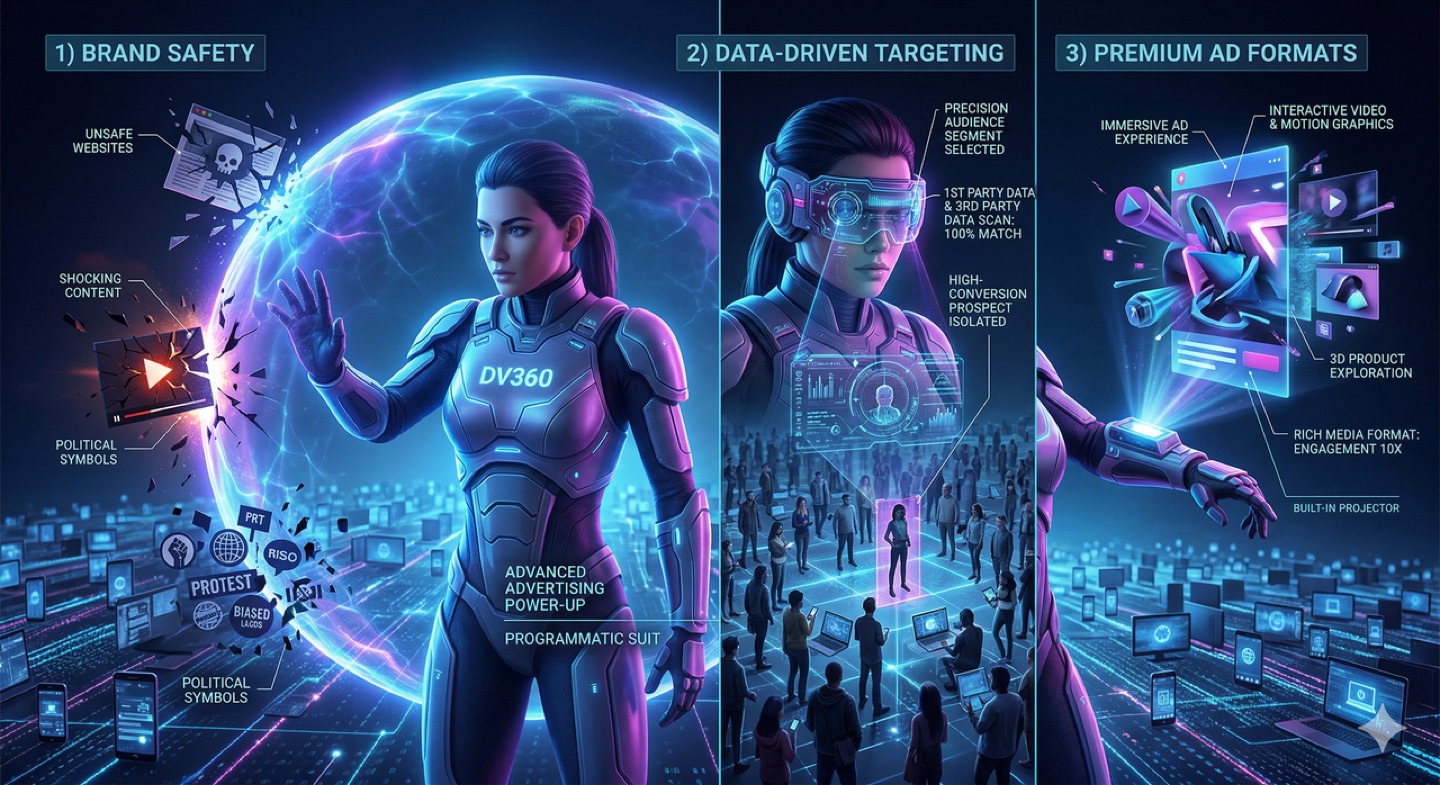
Brand safety: Exclusion settings and publisher checks help reduce the risk of unsuitable environments, but they cannot guarantee that every inappropriate page will be excluded.
Connected analytics and audiences: Businesses can upload first-party data and, where permitted, buy third-party data for more focused targeting.
Formats: Display, video and selected interactive formats are available. Access depends on the publisher, deal and creative requirements.
Specific considerations in Uzbekistan
Uzbek is not listed among the supported targeting languages in Google Ads Help. Rules can differ by format and publisher. Before launching Uzbek-language creative, check current Google requirements and the conditions for the selected inventory. Using DV360 does not by itself guarantee moderation approval.
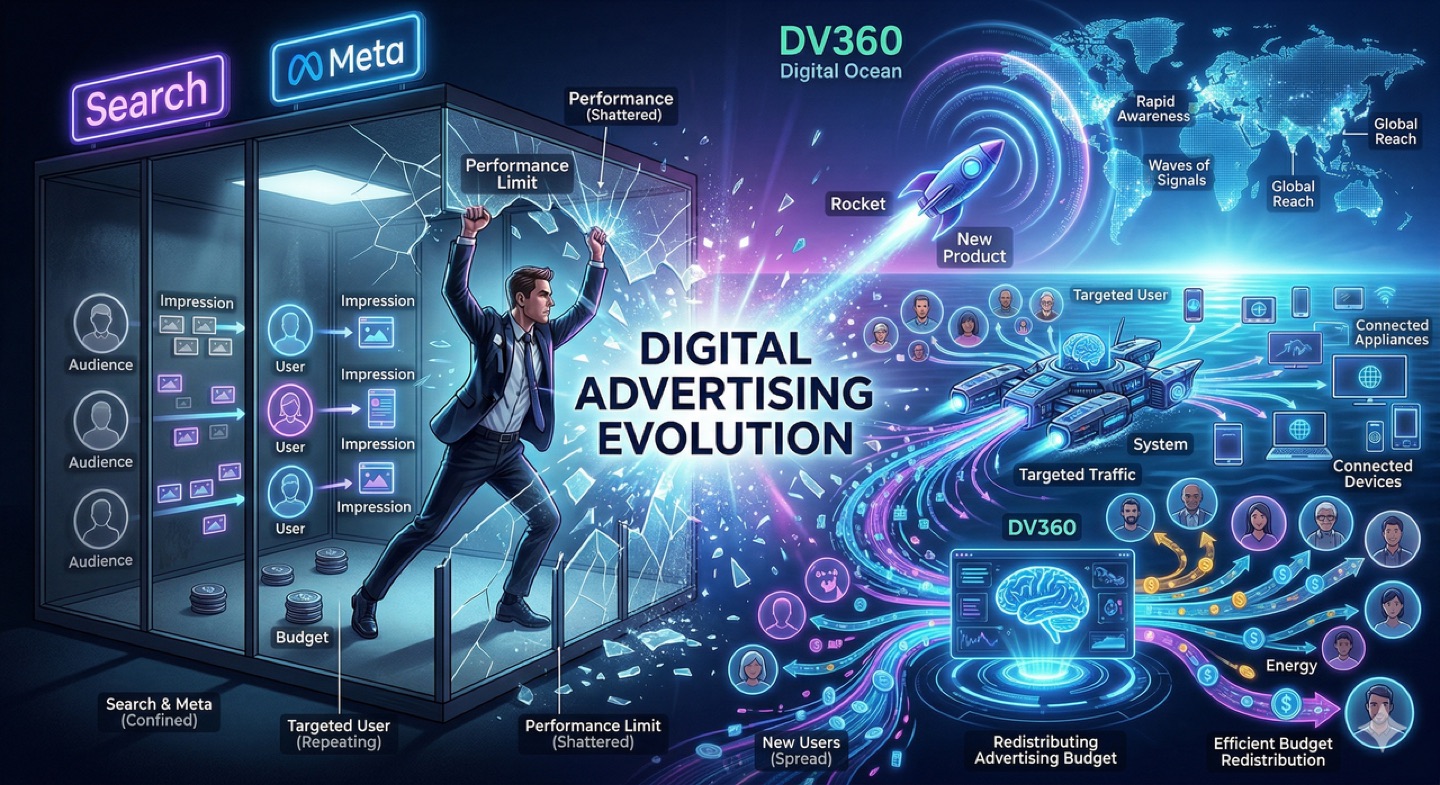
DV360 is a tool for businesses that have reached the ceiling of classic performance channels:
Scaling: DV360 can complement Search and social campaigns with new publishers and formats. Incremental reach and traffic quality must be validated through campaign data.
Launching new products: For real estate, banking, automotive and FMCG brands, the platform can help build reach when inventory, budget and configuration match the objective.
Budget optimisation: Frequency control helps assess repeat contacts and impression distribution. Any saving depends on the starting setup and test results; there is no universal percentage.